Pascha VIII Pentecost

May 30, 2020
5 min read
Updated: Sep 4
Pascha VIII: Pentecost
Acts 2:1-11; Psalm 104; 1 Corinthians 12:3-7, 12-13; John 20:19-23
It has been a most unusual Lenten – Easter journey this year. Ninety days of fasting and abstinence from each other, from gathering, from a communal sacramental life, from…from so many things and people – we take for granted? That in itself, I suppose, is a spiritual lesson of some depth. We want “normal” back. But what exactly is, “normal”? All we can be sure of is that it does not seem like this fast will soon end.
I spoke to you on Holy Thursday evening of being in exile. Exile is a part of our spiritual story. It is necessary at times. It started in the garden when we became exiled from each other, creation and God. And again, in the life of Israel in Babylon. It is our story here in the present. Exile is about absence. Sometimes things, situations, or people are suddenly, even violently, taken away from us, other times we are the ones who need to walk away. The familiar becomes strange and unrecognizable. We work overtime trying to convince ourselves that everything will be OK. We so desperately want to fill the absence and we do with a lot of “stuff” instead of dwelling with it and allowing absence to teach us.

Many of you know what I’m talking about. We’ve had the experience of walking away from a situation or a person, or maybe they’ve left us, only to realize later the full weight and importance of what we had. Regret, awareness and self – reflection can be a pathway of return. But sometimes that person or situation is irretrievable, and even if retrievable it will never be the same. Relationships must be re-maneuvered, renegotiated. It will be a new experience and hopefully one with deeper roots. But for a while it will be an awkward dance.
In this exile, people keep asking me when we will again gather for Mass. I don’t know. The eyes roll, the shoulders sink and the deep sigh is given voice. It’s that indefiniteness that people are uneasy about. We want specific answers and we want them now. We are an impatient people.
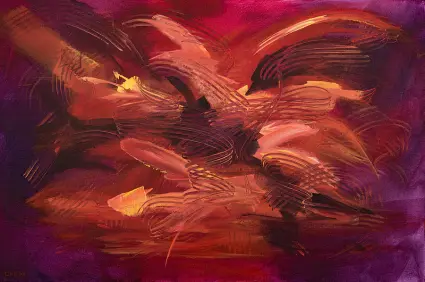
But Pentecost is about uncertainty and inconclusiveness!
What is so secure about a violent rushing wind crashing into our lives, our spaces filled with noise so loud that we cover our ears, and being encircled by something that appears like jets of fire? This spirit – wind blows where it will; does not reveal its source, its purpose or its destination. We are only along for the ride.

All those prayerful, tranquil images that artists have offered us of Pentecost are lies that we look upon to convince ourselves that everything will be OK because we can harness this blustery, noisy, fiery, Holy Spirit. Really? Or to quote Jesus, “Have I been with you all this time, and still you do not know me?” [John 14:9]
The purpose of exile and fasting is to sharpen awareness of the other, to improve the focus of our eyes on the world around us, to deepen our relationship with that which is eternal and transcendent. This extended Lenten exile with its fasting and abstinence is therefore – an opportunity. Will we recognize it as such, learn from it and take advantage of it as we move into the future?
Consider.
For months there have not been any polluting boats and cruise liners in the harbors, did you know that the waters of the Venetian canals are again clear and clean? Did you know that last month, LA had some of the cleanest air in the world along with major cities from India to China, and the United States to Europe?

What will this teach us about humanity’s engagement with our environment? Will we became cognizant, take responsibility and finally act on the moral implications of our human activity on the planet? How will we change our polluting ways of living that Pope Francis of Rome and the Orthodox Patriarch, Bartholomew of Constantinople have highlighted in their writings?
Anne Frank lived in isolation and seclusion from the Nazis for two years. undocumented immigrants have lived that long and more in churches fleeing violence in their home countries while fearing retaliation from other nations because of their status. In nursing homes, many people live out their lives lying in the same bed and in the same room in isolation for years. We incarcerate people for decades and some for the rest of their lives in our prisons. Yet after only three months of lock down, loneliness and isolation, why are so many of us complaining?
What will we allow this experience to teach us? Will we re-imagine long-term healthcare facilities? Will we reconsider immigration law and rethink how we deal with the lives of women and men in our penal system? …on death row? Is our goal rehabilitation or retaliation?
We are chomping at the bit because there is no gathering for Eucharist, our sacramental life or faith formation. Important as all that is, do you realize throughout our worldwide church how many Catholics celebrate the sacraments monthly, bi-monthly or yearly due to geography, refugee status, because we limit ordination to celibate males, violence and war?
What insights have you learned by being made to fast from the Eucharist? In your homes, do you pray ‘grace’ before and after meals and make every meal at home a Eucharist; a thanksgiving? In these months, how have you taken responsibility for your own spiritual life and the spiritual life of your children? Might the blustery spirit be impelling us to rediscovery our Christian roots in living again first as a “domestic” church?

What might a future church look like where young people and adults support each other in living Christian values and traditions within the home environment with the larger parish, its public and communal worship and service programs act as supporting agents?
The environment, the world status and treatment of refugees and immigrants, the incarcerated in our healthcare facilities and prisons and our spiritual life are only a number of justice issues from which exile and fasting can teach us. Are we open to learning, to renegotiating, to re-imagining, to learning new dance steps? If not, I fear this time will be for naught and we will return to being in exile from ourselves and others.
Exile only ends when lessons are learned. The Babylonian Exile lasted 70 years and came to a conclusion only when Israel deeply understood and reclaimed who she was as a people covenanted to God. Then and only then, was she allowed to return to the land of Israel and rebuild her Temple. This pandemic will not last that long but I do not expect we will return until we have learned as a church to live our Catholic Christianity with new insights, with new structures, a renewed understanding of priesthood and more importantly re-imaging the role of the laity, family and “domestic” church in making disciples.
If we move too quickly and return to business as usual we will unknowingly remain in exile. Yes, we will have returned to “normal.” We will feel relieved and secure again. But did you ever consider that what we think is “normal”, is not? That maybe, just maybe, this Pentecostal exile is what the blustery, noisy, fiery Spirit is teaching is the true spiritual “normal.”
That is why spiritually, exile, fasting, and uncertainty are important. They can lead us to a deep trust in God; open us to imagination and dreaming so as to pose new questions and possibilities by offering us new experiences; and thus give us the strength and courage to face unknown futures.
And it all begins with a blustery, noisy, fiery, uncontrollable God.

Comments