Pascha V

Pascha V 2017 – Cycle A Acts 26:1-7; Psalm 33; 1 Peter 2:4-9; John 14:1-12
Though the world and the Church have gone through periods of relative stability like the 1950s, the Church and the world are always changing. The civil rights movements, gay liberation and women rights, and the Second Vatican Council just didn’t appear out of thin air. Issues were brewing for decades underneath society and the Church exploding in the 1960s. And the world and Church have not been the same since. Changing times call for prayer, imagination and trust in the Spirit.
We have experienced similar shifts at a various times in our Church’s history.
The Spirit spurred the Jewish Paul to preach the Gospel beyond the House of Israel to gentiles.
The boldness of medieval nuns and lay women, like Hildegard von Bingen, Julian of Norwich, Mechthild of Magdeburg and the Beguine movement, that went beyond the strictures placed upon women by men to unlock new spiritualities and communal ways of Christian living.
The use of the internet, Apps, websites, YouTube by churches to proclaim the Christian message.
The visioning of a different way to preach the Gospel by Saints Francis and Dominic. Their followers going beyond sanctuaries and monastic walls and into the market places and fields where the people were.
Changing times require not an entrenchment in the past but bold initiatives into the future.
Today’s passage from the Acts of the Apostles records how Greek Christian widows were being neglected compared to Hebrew Christian widows. The community saw issues of unfairness, need, equality, and the acknowledgment that the apostles couldn’t do everything. The Christian community was growing and changing. So through prayer, imagination and trust in the Holy Spirit the community decided, “Select from among you seven reputable men, filled with the Spirit and wisdom whom we shall appoint to the task.” And the Church introduced something new!
In this situation the Church created what we call the ministry of the diaconate – deacons. The word is derived from the Greek word – diakoneo – to serve, as a waiter serves table. We are reminded of Jesus washing feet and serving table the night before he died – like a slave and a servant.

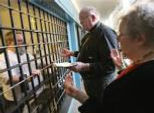


Though the Order of Deacons is ancient, regretfully for centuries it was subsumed by the Orders of Priests and Bishops. It became a steppingstone to priesthood and though the Second Vatican Council restored the diaconate as an Order in its own right, to this day all priests are first ordained deacons.
Yet wherever there is controversy in the Church, there is life; whether in the 1st century, 12th century or the 21st century. Contemporary concerns continue to encircle the Sacrament of Holy Orders and the diaconate.
The discipline of celibacy for priests and bishops.
Does a celibate life speak to contemporary people; to other cultures where being a husband and parent is considered essential for a man to assume authority?
In reflecting upon celibacy, is there value in a lifestyle that challenges an overly sexualized society, where sex has been detached from commitment and marriage; where sex is a manner by which people act out and use each other as objects?
The issue of a married clergy has been rasied. Up through the 12th century all clergy were allowed to be married. Eastern Churches to this day experience a married diaconate and priesthood.
What would a restored married clergy offer the Catholic Church? The reality is we have a married clergy among our deacons.
What might be the gain and message of a church with clergy living out both vows of celibacy, as a personal choice and call, and vows of marriage? …the experience of the single person and married person; the experience of singularity and community in parenthood?
There is the issue of ordaining women. And though the Church continues to teach that we cannot admit women to Holy Orders, many of us keep talking about it and questioning the teaching since women were ordained as deacons for almost a millennia in the West. The Eastern Orthodox Church continues the practice.
By these conversations, is the Holy Spirit subverting the bishops who, like all members of the Church, are called to listen to the promptings of the Spirit?
What would the witness of women bring to the Sacrament of Holy Orders through formal ministry of the Gospel?
Is there a fear that if we again ordain women deacons, then priesthood will not be far behind?
What new insights of scripture would be opened to us if women preached in our churches?
How many women have been and are living out the diaconal life of service in our Church with little recognition?
Consider how many lay and religious women over the centuries were and are involved in working in food pantries, advocating for the poor, the homeless and people on the cusp of life, teaching in our Catholic schools and Faith Formation programs, staffing diocesan and parish offices, being martyred for feeding the hungry, teaching children, offering medical care to indigenous women, protesting capital punishment and racism and walking with people on death row, and chaplains in hospitals.
Consider how many women as nuns founded universities and colleges, founded and staffed hospital and medical systems and orphanages.
How many women, lay and nuns were a part of all of our lives at some point?
The story of the conception and now the restoration of the diaconate and its subsequent questions and arguments can challenge us as we reflect on the Sacrament of Holy Orders.
What constitutes authority in the Church?
What is the criteria for leadership in the Church?
What do foot washing and table serving mean as examples of service?
What contemporary situations are calling for new ministries in the Church?
In our day, where is the creativity, bold insight and trust in listening to the promptings of the Holy Spirit? Promptings rooted in the teaching of the risen Christ who proclaimed, “Behold, I am making all things new!” [Revelation 21:5]

Comments