Ordinary 17

The Seventeenth Sunday in Ordinary Time 2019 – Cycle C Genesis 18:20-32; Psalm 138; Colossians 2:12-14; Luke 11:1-13
“For the sake of ten innocent people, I will not destroy the cities of Sodom and Gomorrah.”
But there weren’t ten innocent people in the cities. I expect Abraham already knew that; so might have God. In the end only four people, Lot, Abraham’s nephew, Lot’s wife and two daughters, escape.
The entire biblical story is about God’s relationship with us. God creating us. God giving us the world for our use. God walking with us. God making promises to us. When we sin, God saving us by becoming one of us in Jesus. Yet in this story we seem to always be preoccupied about what was the sin of Sodom and Gomorrah. I expect that says more about us then God. Now there is no question about the sinfulness of the cities. According to the prophet Isaiah the sin of Sodom and Gomorrah was a lack of social justice. The prophet Ezekiel described it as a disregard for the poor, whereas Jeremiah saw it as general immortality. Yet how many men and women have been abandoned, abused, bullied and murdered because of the claim of homosexuality as the sin of these cities when within the bible itself, there is no consistency? When Jesus mentions the cities, he says it will be more tolerable for them then for people who refuse to hear and accept his word and repent.
So what is this complex story about?
Abraham begins with two questions: “Will you sweep away the innocent with the guilty? Should not the judge of all the world act with justice?” The answers are obvious! Of course God should act with justice. But who’s sense of justice; ours or God’s? And what is justice in this situation?
Six times Abraham questions God; not to bargain with God but to understand how God thinks. Who is valuable to God, the innocent or the guilty? How patient is God with sinners? Is the goodness of innocent people strong enough to postpone or even prevent the punishment of the wicked? Thus can a few people be the salvation for the many? How ready is God to save? What are the parameters of God’s mercy and forgiveness?
And with each question God appears to adjust with Abraham or is this what God already had in mind? Whose sense of justice is really being probed, God’s or Abraham’s, God’s or ours?

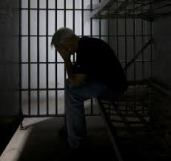

These questions regarding justice and the goodness of the innocent as a remedy for the guilty are very timely as this week Attorney General William Barr cleared the way for the federal government to resume executions. After a nearly two-decade lapse in the use of capital punishment, the move, according to a Department of Justice statement will bring “justice to victims of the most horrific crimes”. It will? What is this claim based on? And what is just in the face of murder, torture and rape?
In a country where we strive to live by the “rule of law”; are there moral values that are greater and more overarching then a congressionally authorized death penalty, a fair legal proceeding and a judgement by a jury of one’s peers? Does this process result in justice as claimed by the Department of Justice? Sr. Helen Prejean, CSJ, a Roman Catholic sister of the Congregation of St. Joseph and a leading American advocate for the abolition of the death penalty states, “We know that the death penalty is deeply flawed, with a terrible history of racism in its implementation and an equally terrible history of errors, resulting in many innocents on death row.” Recall Abraham’s question, “Will you sweep away the innocent with the guilty? We have. And who accomplishes justice when the innocent are unjustly treated?
As Catholic Christians, we claim to be unconditionally pro-life. The overarching value we hold is the sacredness of all human life; even a human life that is deeply sinful and warped is still in the image and likeness of God. We believe this because we believe in hope, in the ability of God’s grace to transform a person. We believe in redemption. Thus Sr. Prejean has founded the groups SURVIVE, to help families of victims of murder and related crimes because she states, “We also know that [the death penalty] does not offer the healing balm to victims’ families that is promised.”
In 2015 Pope Francis, echoing the views of his predecessors, called for “the global abolition of the death penalty”. He went on to state that, “[A] just and necessary punishment must never exclude the dimension of hope and the goal of rehabilitation”.
What is the source of healing for victims of unbearable crimes? Is it not the goodness of the innocent few that can and do make a difference for both the victim and the perpetrators of crime? That is what Abraham was seeking. The story is about the power of goodness.
Think of the difference that would have been achieved if only there were six more innocent people in Sodom?
Capital punishment has been abolished or suspended throughout Western Europe and in 170 nations around the world. The United States is among a handful of nations that continue the practice.
Comments