Advent IV

Advent IV 2015 – Cycle C Micah 5:1-4a; Psalm 80; Hebrews 10:5-10; Luke 1:39-45
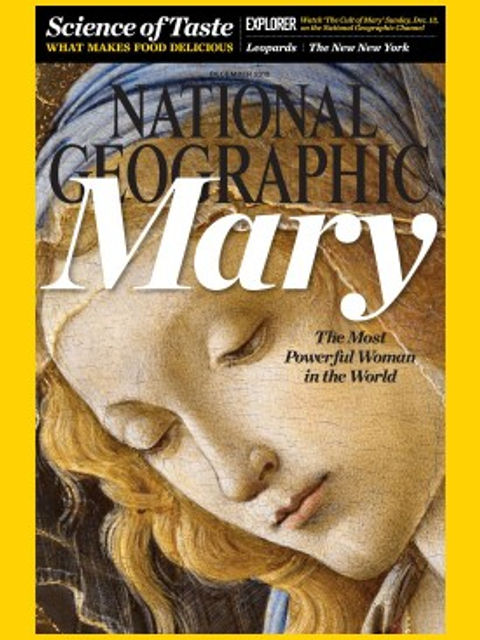
I was drawn with interest to the cover of the December 2015 issue of National Geographic. It is a detail of a painting of The Virgin and Child by Renaissance artist, Sandro Botticelli. The cover story: Mary: the Most Powerful Woman in the World. My initial interest turned uneasy. It is the word powerful. Power is a word that I’ve considered should be abandoned as part of our spiritual conversations. As when people talk about the power of prayer. What do people mean by that phrase? Then I read the Editor’s Introduction and my unease turned to disturbed. [Mary’s] powers are invoked for anything and everything. Art history professor Melissa Katz of Wesleyan University is quoted, “You see yourself and your concerns reflected” in Mary. “That’s what Mary has always done, that Jesus could not. She’s more accessible, less threatening, always on people’s side.” So Jesus is inaccessible? Jesus is threatening? Jesus is unconcerned about us to the point of being against us, not on our side? Is this what our experience of Jesus is: threatening, distant, and uncaring? And thus we have had to recreate Mary?
After you have freed Mary from all the titles and honours generations have layered upon her, what power does Mary of Nazareth possess? Remember, this is the young woman who responds to the archangel Gabriel: “Behold, I am the slave of the Lord” [Luke 1:38] In other words: “Behold, I am one who gives myself over to the will of God”. Mary sings in her great song of praise, the Magnificat, “For God has looked on the lowliness of his slave…” and then continues singing of God overthrowing the mighty, the powerful and the rich while raising up the lowly and powerless. [See Luke 1:46-55] This is a song of revolution. This is the song of the reign of God.
If Mary, as I am positing, is not the most powerful woman in the world, then what is she? Is that even the right question to ask?
After identifying herself as a slave of God, she runs in haste to her elderly and pregnant cousin, Elizabeth. Mary remains with Elizabeth to assist her through the last trimester of her pregnancy. Isn’t this what slaves do? Serve. Put the needs of the master ahead of theirs.
During the visit, Elizabeth calls Mary blessed. Blessed because she trusted what God promised in the garden to Adam and Eve, promised through the patriarchs Abraham, Isaac and Jacob, promised through the prophets, promised to her that the impossible would happen for the sake of others. Trust. Constancy. Fidelity. Isn’t this what slaves also offer to their masters? To be blessed is to trust God and God’s promises.
Recall the wedding in Cana of Galilee.To the stewards, Mary’s life, as a mother now herself, continues to pierce the darkness with concern for those in need; the young couple. She also teaches us to look deeply into people’s lives and call forth their gifts. To know before other’s do when it is time to share what God has given them – for others.Jesus said. Protestations always falter in the presence of wisdom.[See John 2:1ff] Words that echo down the generations to those who desire to deeply enter on the spiritual journey.
Whose concerns are your concerns?
Have you ever identified and called forth gifts from another person? Seen in them what they themselves do not as yet see or are afraid to acknowledge?
Do you and I do whatever Jesus tells us?
Mary broadens our understanding of being a slave of God.
Slaves stand by their master’s side. And so courageously Mary stands by her master – her son –as the State executes him and identifies with him as, Mother of Sorrows. Do we stand without judgment by those whom other people and institutions exclude and condemn? The imprisoned, the guilty and the innocent; those imprisoned by bullies, disabilities, isolation, language, mental illness…?
Mary was offered a third blessing. This time by an anonymous woman from the crowd shouting out to Jesus: “Blessed is the womb that bore you and the breasts that fed you.” Jesus counters and sums up the life of his mother – slave of God. “Rather, blessed are those who hear the word of God and live it out.” [Luke 11:27-28] This is the greatest of honours that the slave, Mary has ever received. This is the deepest of insights into the person of Mary of Nazareth.
My use of the word slave may have made you uncomfortable because it bears a heavy and burdensome history for us. Ships stacked with human cargo like sacks of sugar cane. The Aunt Jemima docility of minstrels and Uncle Toms portrayed in the movies back to the beginning of the 20th century. A civil war that continues a century laterin arguments over the meaning and the flying of the Confederate Flag . The images of American law enforcement using water cannons and attack dogs on black citizens during the Civil Rights Movement to present day shootings in Ferguson and Chicago.
In the light of Sacred Scripture the image of a slave does speak about power; the power of emptying. This is the power of Mary; not miracles and visions, not healings and secret messages, not in being more accessible and less threatening, but the power of emptying oneself to listen and take in the Word of God to such a degree that the Word becomes one with your flesh. It is a lesson Mary learned from her Master and son, Jesus. It is the ultimate lesson she teaches us. A lesson Paul raised to the level of song:
“Though Jesus was in the form of God, he did not regard equality with God something to be grasped. Rather, Jesus emptied himself and took the form of a slave…” [Philippians 2:6-7ff]
This emptying is accessible to us. Service. Trust. Fidelity. Courage. Standing and identifying with the condemned and discarded of humanity. Doing whatever the Master, Jesus, tells us.
This is powerlessness imbued with divine strength. This is the powerlessness of Mary of Nazareth. This is the strength of Christmas.
Comments